Rozhovory v Lucemburku
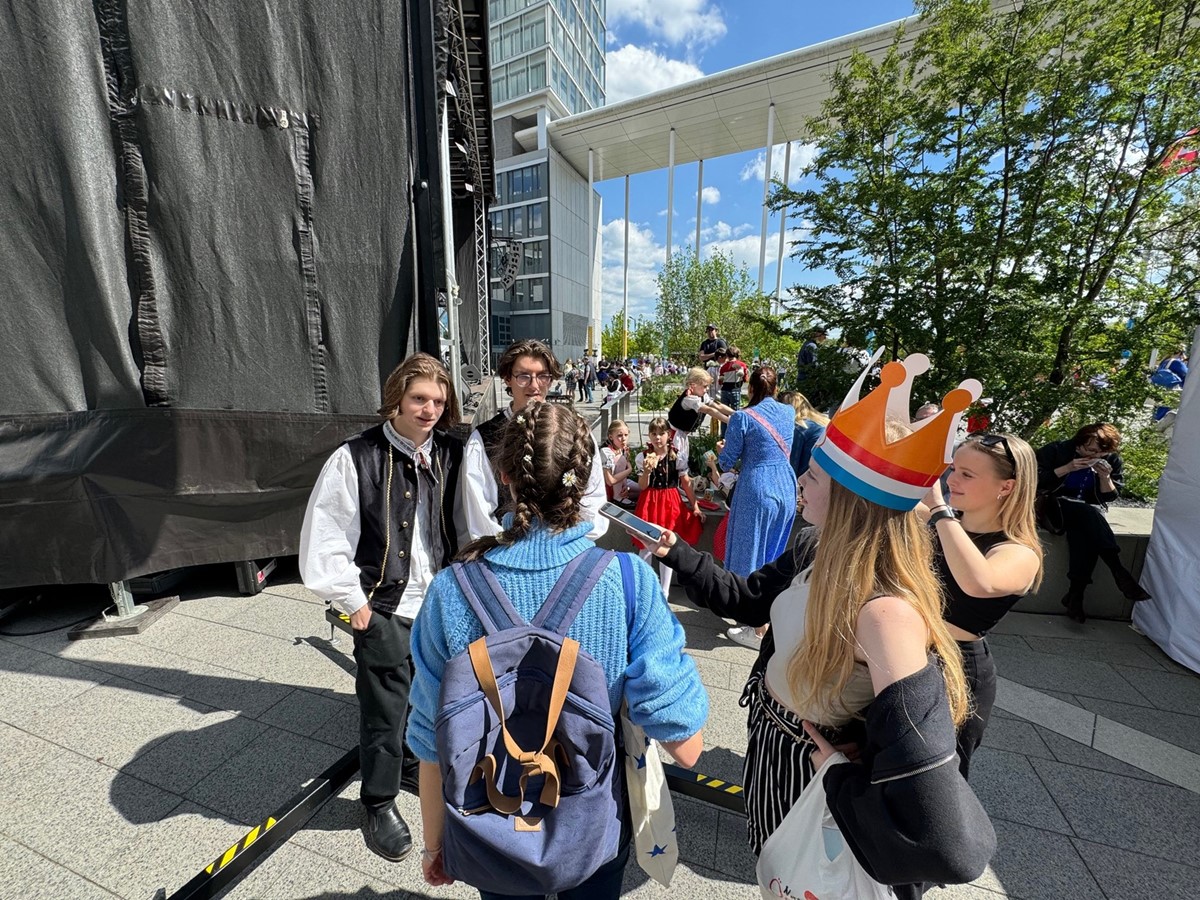
Naše setkání na Dnu Evropy
Rozhovory
V rámci projektu Erasmus+ se skupina studentů Bigy měla možnost setkat se zajímavými osobnostmi a během Dne Evropy s nimi udělat rozhovory.
Studenti mimo jiné narazili i na své vrstevníky, Eduarda a Huga Klose. Těch se zeptali na několik otázek.
K: Byli bychom rádi, kdybyste nám řekli něco o místním školském systému, jak se vám tady líbí, a jak to funguje, jakej je rozdíl a tak.
E: Jo já začnu klidně. No my tady máme 2 systémy, ten lucemburský a potom evropskej a já jsem s Hugem, mým bratrem, na tom lucemburským systému a musím říct, že se mi líbí ten lucemburský víc, protože ty se tam naučíš všechny různý řeči, kterými se tady mluví, jako francouzština, němčina a taky lucemburština. Na tom evropským systému tam se učíš jenom tvojí vlastní řeč a nic jinýho.
K:A celkově Lucembursko, jak se vám tady žije?
H: Místama je to tady dost drahý, takže je to [zvuk horské dráhy], jinak je to tady normální
E: Taky tu máte zdarma transport
K: Nějakou zajímavost o Lucembursku, kterou byste nám třeba řekli, nebo tak jako perličku.
H: No tak to, že ten transport je zdarma, to je perlička. No a ještě ten fakt, že tady je tolik národností, takže je jedno, kam jdeš s každým se můžeš domluvit, ale jakoby nerozumíš mu.
K: To chápu no
H: Jako to je takovej lucemburský problém, který tady je. Ale je to takový, to je Lucembursko.
Poté jim chlapci představili svého otce, Martina Klose, který pracuje v instituci EU a s ním také udělali krátký rozhovor.
K: Jaká je tedy Vaše pozice?
M: No já mám dvě pozice. 1. pozici mám v práci, tam pracuju na soudním dvoře jako právník lingvista. To je vlastně překladatel a 2. pozici mám jako kapelník tady v naší kapelce.
K: A jak jste se dostal sem do Lucemburska?
M: Já jsem totiž vystudoval práva na Karlově univerzitě. A během těch studií jsem si vydělával překládáním, protože jsem předtím studoval ve Francii. Pak se ke mně doneslo, že soudní dvůr potřebuje překladatele, tak jsem se přihlásil a vzali mě, jsem tu už 14 let.
K: Máte děti?
M: Mám 3 chlapce.
K: A chodí do nějakých lucemburských nebo evropských škol?
M: Do lucemburských.
K: Jo a jak se vám zdá lucemburský školský systém? Protože jsme o něm slyšeli tady spoustu věcí, tak jestli to pro ně nebyl moc šok.
M: Zpočátku to asi byl šok, protože samozřejmě, když šli do školky, tak to (jazyk) neuměli, ale pak se jako sžili a jsou rádi, že jsou tam, kde jsou a mají plno kamarádů. Tak jako vy, ve škole je to stejný.
Další osobností, které se měli studenti možnost zeptat na život v Lucembursku byla dcera paní Jitky Stráské, Jitka.
K: Tak povíte nám něco o své pracovní pozici, prosím?
J: Takže já pracuju na Soudním dvoře Evropské Unie jako právnička lingvistka, což, jak vám vysvětloval můj kolega Martin, vlastně znamená, že překládám hlavně rozsudky soudního dvora z angličtiny a z francouzštiny do češtiny.
K: A co jste vystudovala, a jak jste se sem dostala?
J: Vystudovala jsem práva a dostala jsem se sem přes stáž v roce 2014, a už si mě tady nechali.
K: Jak se vám tady líbí?
J: Jo, líbí se mi tady moc, jako Lucemburk je hrozně hezký místo k žití. Mně se hrozně líbí jakoby, jak je tady to multikulturní prostředí, že opravdu tady potkáte prostě lidi z celýho světa.
Mimo jiné je zde prý skvělé prostředí pro jejího syna a v Lucemburku je spokojená.
Ptala se Dita Hájková
Our Meeting on Europe Day
Interviews
As part of the Erasmus+ project, a group of students from Bigy had the opportunity to meet interesting people and interview them during Europe Day.
Among others, the students met their peers, Eduard and Hugo Klose, and asked them a few questions.
K: We’d be happy if you could tell us something about the local school system, how you like it here, how it works, what the differences are, and so on.
E: Sure, I can start. Well, we have two systems here: the Luxembourgish one and the European one. Hugo, my brother, and I attend the Luxembourgish system, and I have to say I like it more because you learn all the different languages spoken here, like French, German, and Luxembourgish. In the European system, you mainly learn only your own language and nothing else.
K: And what about Luxembourg overall? How do you like living here?
H: In some ways it’s pretty expensive here, so it’s kind of a roller coaster, but otherwise it’s normal.
E: Public transport is free here too.
K: Is there any interesting fact about Luxembourg, maybe a fun fact you could tell us?
H: Well, the free transport is definitely one fun fact. And another thing is that there are so many nationalities here that no matter where you go, you can communicate with anyone, even if you don’t fully understand them.
K: Yeah, I get that.
H: That’s kind of a Luxembourgish problem here. But that’s just Luxembourg.
After that, the boys introduced their father, Martin Klose, who works for an EU institution, and the students conducted a short interview with him as well.
K: So what exactly is your position?
M: Well, I actually have two positions. My first position is at work, where I work at the Court of Justice as a lawyer-linguist. That basically means I’m a translator. My second position is being the bandleader of our little band here.
K: And how did you end up here in Luxembourg?
M: I studied law at Charles University. During my studies, I earned money by translating because I had previously studied in France. Then I heard that the Court of Justice needed translators, so I applied, got accepted, and I’ve been here for 14 years now.
K: Do you have children?
M: Yes, I have three boys.
K: And do they attend Luxembourgish or European schools?
M: Luxembourgish schools.
K: And what do you think of the Luxembourgish school system? We’ve heard a lot about it here, so I wonder whether it was a big shock for them.
M: At first it probably was a shock, because when they started kindergarten, they obviously didn’t know the language. But then they adapted, and now they’re happy where they are and have lots of friends. Just like you — school is the same everywhere.
Another person the students had the opportunity to ask about life in Luxembourg was Jitka, the daughter of Mrs. Jitka Stráská.
K: Could you tell us something about your job position, please?
J: I work at the Court of Justice of the European Union as a lawyer-linguist, which, as my colleague Martin explained, basically means that I mainly translate Court judgments from English and French into Czech.
K: And what did you study, and how did you get here?
J: I studied law, and I came here through an internship in 2014. They ended up keeping me here.
K: How do you like it here?
J: I really like it here. Luxembourg is a very nice place to live. What I especially like is the multicultural environment — you really meet people from all over the world here.
She also mentioned that it is a great environment for her son, and that she is very happy in Luxembourg.
Interviewed by Dita Hájková